

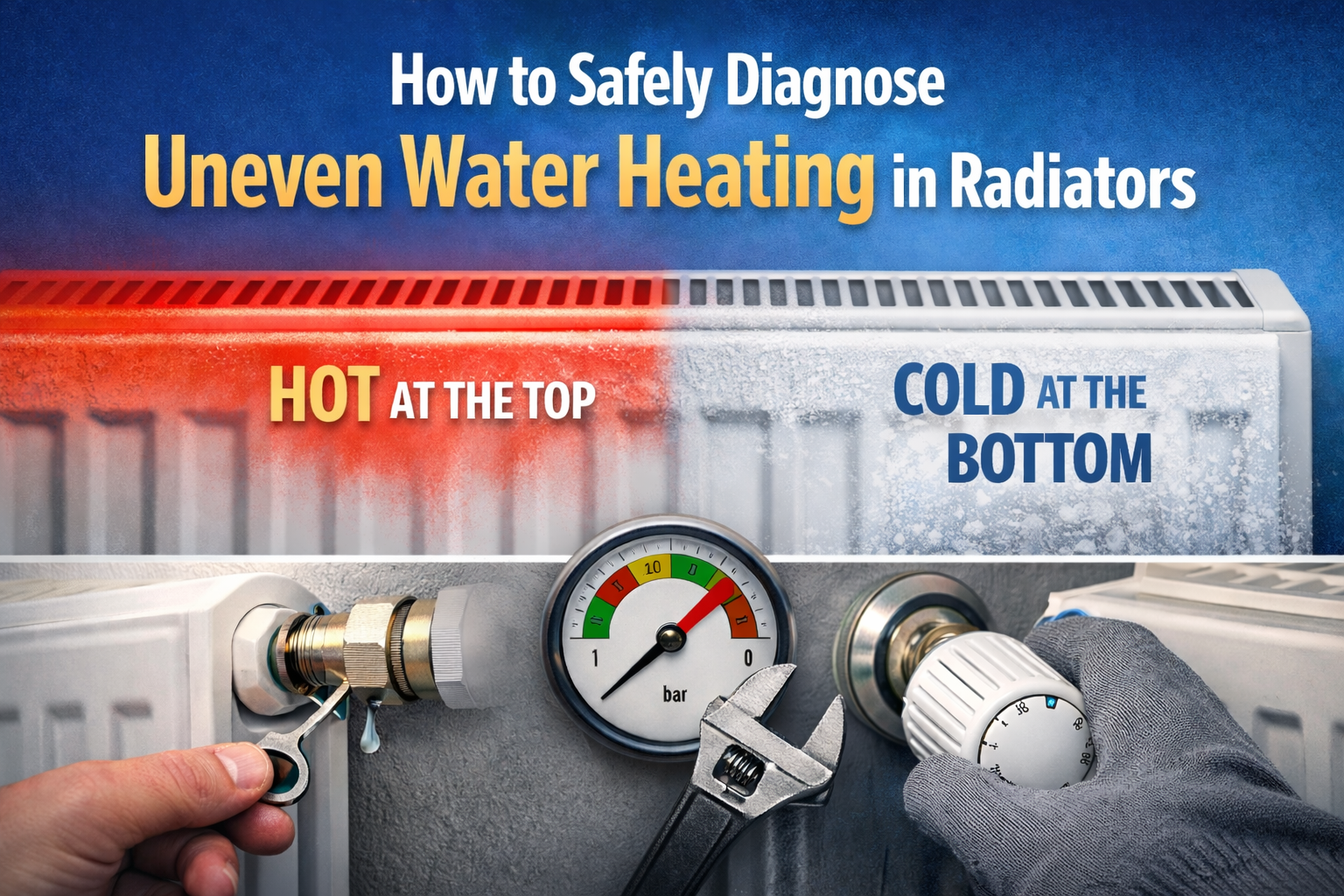
Uneven radiator heating is one of the most common heating complaints in UK homes. One room feels toasty while another stays stubbornly cold. Or perhaps the radiator is hot at the top but cold at the bottom. As someone with over 15 years of hands on experience in plumbing and heating services, I have seen this issue in everything from Victorian terraces to modern new builds.
The good news is that in many cases, you can safely diagnose uneven radiator heating yourself before calling in a professional. This guide is written to help homeowners understand what is happening inside their heating system, what checks are safe to do at home, and when it is time to contact a trusted professional like Plumbing Network.
What Does Uneven Radiator Heating Actually Mean
Uneven radiator heating usually shows up in one of these ways
- The radiator is hot at the top but cold at the bottom
- The radiator is warm at the bottom but cold at the top
- Some radiators heat up faster than others
- One or more radiators do not heat up at all
Each of these symptoms points to a different underlying issue. Correct diagnosis is key to avoiding unnecessary costs or unsafe DIY fixes.
How to Diagnose Uneven Radiator Heating Safely
Before touching anything, make sure the heating is switched off and the system has cooled down. Safety always comes first.
Check if Air Is Trapped in the Radiator
If your radiator is hot at the bottom but cold at the top, trapped air is the most likely cause.
Signs to look for
- Gurgling or bubbling noises
- Cold spots at the top of the radiator
What you can do
Use a radiator key to slowly bleed the radiator. Hold a cloth underneath and stop once water flows steadily. This is one of the safest DIY checks and often solves uneven radiator heating immediately.
Look for Sludge Build Up
If the radiator is hot at the top but cold at the bottom, sludge inside the system is a common culprit, especially in older UK homes.
What causes this
Over time, rust and debris settle at the bottom of radiators, restricting water flow.
What to do
You can feel the radiator surface to confirm uneven temperature. Removing sludge usually requires power flushing, which should be carried out by professionals like Plumbing Network to avoid damage to your boiler or pipework.
Check Radiator Valves and TRVs
Faulty or stuck valves can prevent hot water from flowing properly.
Steps you can take
- Make sure both valves are open
- Gently turn the thermostatic radiator valve to see if it moves freely
If a valve feels stuck or leaks, stop and call a professional. Forcing it can cause water damage.
Review Boiler Pressure
Low system pressure can cause uneven heating across radiators.
How to check
Look at your boiler pressure gauge. Most UK systems work best between 1 and 1.5 bar when cold.
If pressure is too low
You may need to repressurise the system. If you are unsure, Plumbing Network can guide you safely or arrange a visit.
Consider Radiator Balancing
If some radiators heat up quickly while others stay lukewarm, the system may be unbalanced.
What balancing means
It ensures hot water is distributed evenly throughout your home.
This process involves adjusting lockshield valves and should be done carefully. Incorrect balancing can worsen uneven radiator heating, so many homeowners prefer expert help.
Conclusion
Uneven radiator heating is frustrating, uncomfortable, and often a sign that your heating system needs attention. By learning how to diagnose uneven radiator heating safely, you can take the first steps towards a warmer, more efficient home.
Simple checks like bleeding radiators and inspecting valves can solve minor issues. For deeper problems such as sludge or balancing, trusted professionals make all the difference.
If your radiators are not heating evenly and you want a reliable solution, Plumbing Network is here to help.



Leave a Reply