

Waking up to a cold house or a boiler warning light is frustrating, especially when everything seemed fine the night before. One of the most common causes homeowners face is boiler pressure dropping overnight. After more than 15 years working in plumbing and heating, this is an issue we see regularly across homes in Sheffield and the surrounding areas.
The good news is that not every pressure drop means an expensive repair. In many cases, there are simple checks you can safely do at home before calling a professional. This guide explains why boiler pressure drops overnight, what to check yourself, and when it is time to call for boiler repair Sheffield services.
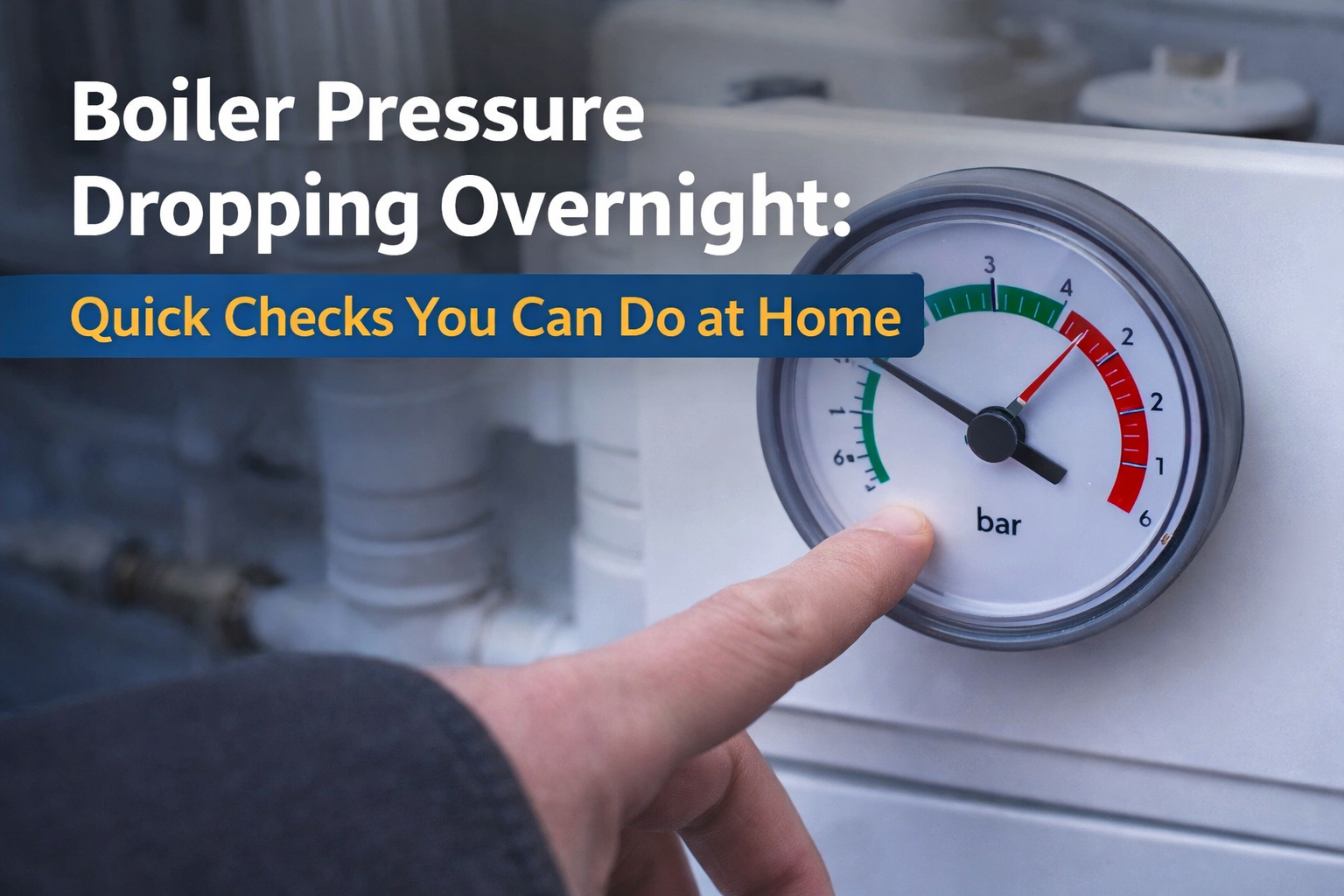
What Is Boiler Pressure and Why It Matters: Boiler pressure refers to the amount of water circulating within your central heating system. Most modern boilers work best when the pressure gauge sits between 1 and 1.5 bar when cold. If the pressure falls too low, your boiler may stop working altogether or fail to heat your radiators properly. A pressure drop overnight often points to an underlying issue that should not be ignored.
Common Reasons Boiler Pressure Drops Overnight
Pressure rarely drops without a reason. Overnight changes usually highlight issues that develop slowly or only show themselves when the system cools down.
Small leaks in the system: Tiny leaks in pipework, radiator valves, or joints can release water gradually. These leaks are often more noticeable overnight when heating is off and the system cools.
Recently bled radiators: If you have recently bled your radiators, trapped air has escaped and water pressure will naturally drop. This is normal but the system needs topping up afterwards.
Faulty pressure relief valve: A worn or faulty pressure relief valve may release water intermittently. This often happens silently overnight and leaves no obvious signs indoors.
Expansion vessel issues: The expansion vessel manages pressure changes as water heats and cools. If it loses its air charge, pressure can fluctuate and drop when the system cools overnight.
Quick Checks You Can Do at Home: Before booking boiler repair Sheffield support, there are a few safe checks you can carry out.
Check the pressure gauge: Look at the boiler pressure gauge first thing in the morning. If it is below 1 bar, the pressure is too low and needs attention.
Inspect visible pipework and radiators: Check around radiators, valves, and exposed pipes for signs of water, corrosion, or staining. Even a small damp patch can indicate a slow leak.
Look at the pressure relief pipe outside: Many boilers have a copper pipe that exits outside. If the ground beneath it is wet or stained, water may be escaping from the pressure relief valve.
Top up the pressure carefully: If your boiler has a filling loop and you are confident using it, you can top up the pressure to the manufacturer recommended level. Always do this slowly and never overfill.
Monitor pressure overnight: After topping up, check the pressure again the next morning. If it drops again, there is likely a fault that needs professional attention.
When Boiler Pressure Dropping Overnight Becomes a Bigger Problem
If pressure continues to fall even after topping up, it is a sign that something is wrong. Repeated pressure loss can damage boiler components and reduce efficiency. At this point, contacting experienced heating engineers like Plumbing Network is the safest option. Professional diagnosis prevents small issues from turning into costly breakdowns.
Final Thoughts
Boiler pressure dropping overnight is not something to ignore, but it does not always mean a major fault. Simple checks at home can help you understand what is happening and whether professional help is needed.
If your boiler continues losing pressure or you want peace of mind, Plumbing Network is here to help. Our experienced engineers provide trusted boiler repair Sheffield services, ensuring your heating system stays safe, efficient, and reliable.
Contact Plumbing Network today to book an inspection or speak with one of our heating specialists.




Leave a Reply