

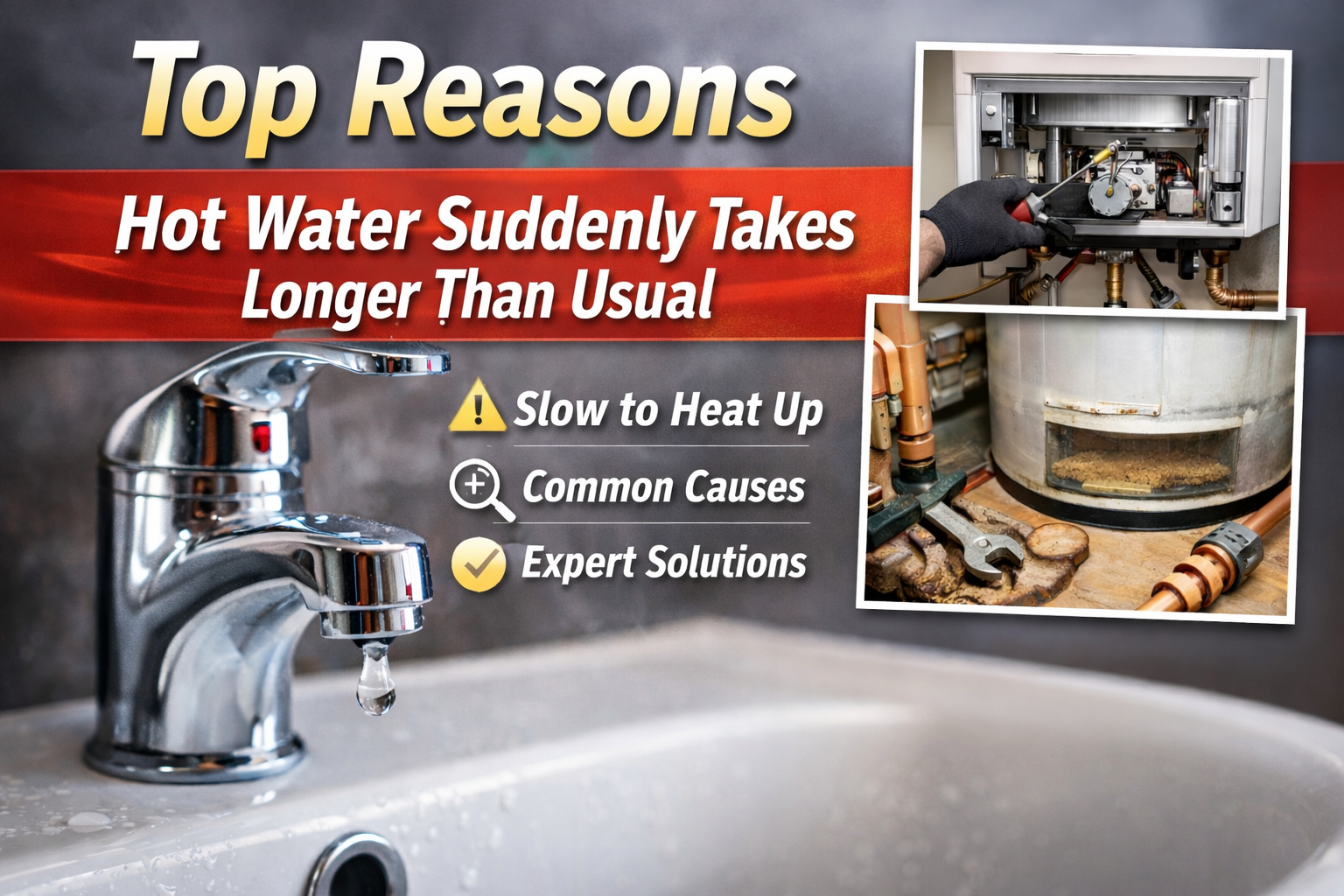
Standing at the sink or in the shower waiting for hot water can quickly turn from a mild annoyance into daily frustration. In my experience of over fifteen years working hands on in plumbing and heating across South Yorkshire this is one of the most common issues homeowners raise. The key point many people miss is that hot water delays rarely happen without a reason. Your system is usually giving you an early warning sign.
This in depth guide explains why hot water suddenly takes longer than usual and what you can realistically do about it. It is written for homeowners who want clear answers not technical jargon. Where professional help is needed the guidance reflects the standards used by Plumbing Network, a trusted provider of plumbing and heating solutions.
Why slow hot water should not be ignored
When hot water takes longer to arrive it often means energy is being wasted. Cold water is run down the drain while the boiler works harder than necessary. Over time this leads to higher energy bills increased wear on components and a greater risk of breakdowns. In winter this can quickly become an emergency.
Reasons your hot water is delayed
- Long distance between boiler and outlets
In many homes especially those with extensions the boiler is located far from bathrooms or kitchens. Hot water must travel through long pipe runs which naturally increases waiting time.
- Poor or missing pipe insulation
Uninsulated pipes lose heat rapidly particularly in lofts garages and under floors. Each time you turn on the tap the system has to reheat the water.
- Ageing boiler efficiency
As boilers age internal components wear down reducing how quickly water is heated even if the unit still appears to work.
- Limescale buildup inside the boiler
In hard water areas limescale forms on heat exchangers acting as a barrier between heat and water. This is one of the most common causes I see in Sheffield homes.
- Sediment in hot water cylinders
For properties with traditional cylinders debris settles at the base reducing heat transfer and slowing recovery time.
- Incorrect thermostat settings
If the boiler thermostat or cylinder thermostat is set too low hot water production will be slower.
- Partially closed service valves
Valves may have been adjusted during previous repairs and not fully reopened restricting flow.
- Low incoming water pressure
Hot water relies on cold mains pressure. If this drops hot water delivery slows too.
- Outdated narrow pipework
Older properties often have smaller diameter pipes that cannot support modern water demand.
- Faulty diverter valve
In combi boilers the diverter valve directs heat to hot water or heating. When worn it struggles to switch efficiently.
- Multiple outlets in use
Running taps showers or appliances simultaneously divides flow and delays hot water.
- Failing heat exchanger
This vital component transfers heat from gas to water. When scaled or worn performance drops significantly.
- Missed annual servicing
Regular servicing prevents small issues becoming major faults. Skipping it allows inefficiencies to build unnoticed.
- Airlocks in pipework
Trapped air interrupts smooth water flow causing delays and uneven temperatures.
- Undersized boiler
A boiler that is too small for the household cannot meet demand quickly.
- Extended pipe runs after renovations
Loft conversions and new bathrooms often increase distance without system upgrades.
- Faulty flow sensor
If the boiler does not detect water demand correctly it will delay ignition.
- Old or damaged cylinder insulation
Heat loss from the cylinder means water cools faster between uses.
- Seasonal temperature changes
In winter incoming water is much colder meaning longer heating times.
- DIY plumbing alterations
Poorly planned pipe changes often create unnecessary bends and restrictions.
- General wear and tear
Like any mechanical system plumbing components degrade over time and efficiency reduces.
How professional plumbers in Sheffield approach the problem
Experienced plumbers do not guess. They diagnose. At Plumbing Network the process typically includes checking boiler performance measuring flow rates inspecting valves assessing pipe insulation and reviewing system design. This structured approach ensures the real cause is resolved not just the symptoms.
Final thoughts
When hot water suddenly takes longer than usual it is rarely something to ignore. Whether the cause is limescale ageing components or system design issues early action saves money and prevents breakdowns.
If you want honest advice from experienced Plumbers in Sheffield who truly understand how to fix boilers, Plumbing Network offers professional assessments focused on long term reliability not quick fixes.




Leave a Reply