

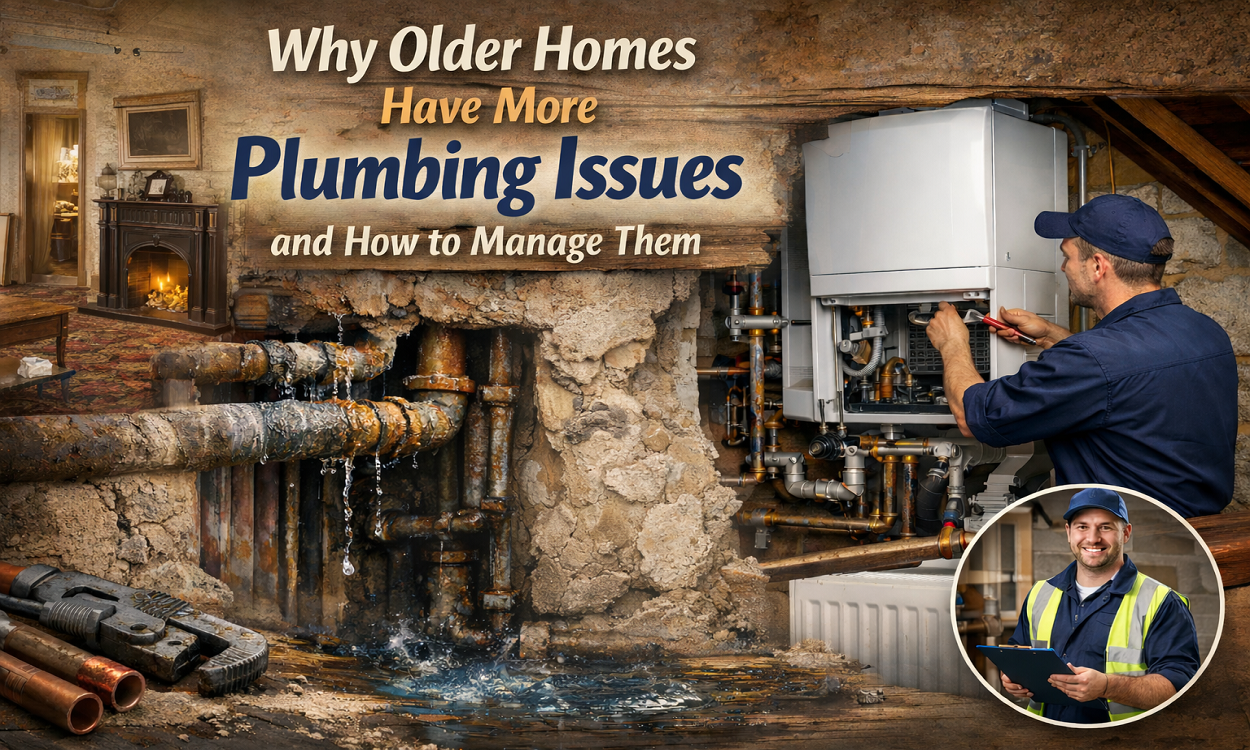
Older homes have a charm and character that many homeowners love. From period terraces to Victorian semis, these properties often feel warmer and more personal than modern builds. However, after more than 15 years working in plumbing and heating services across South Yorkshire, I can confidently say that older homes almost always come with more plumbing challenges.
If you live in an older property or are considering buying one, this guide explains why plumbing issues are more common, what problems to look out for, and how experienced plumbers in Sheffield help homeowners manage them effectively.
Why plumbing systems struggle in older properties: Ageing pipework and materials: Many older homes still rely on original plumbing materials such as galvanised steel, lead, or early copper pipes. Over decades, these materials corrode internally, restrict water flow, and eventually fail.
Common signs include
• Low water pressure
• Discoloured water
• Frequent leaks or pinhole bursts
According to guidance from the UK Drinking Water Inspectorate, lead pipework in older homes can also pose health concerns if not replaced.
Outdated plumbing design: Plumbing systems were not designed for modern lifestyles. Older layouts struggle to support multiple bathrooms, powerful showers, or modern appliances running at the same time.
This often results in
• Inconsistent water temperature
• Poor shower pressure
• Slow drainage
Plumbers in Sheffield frequently see these issues in homes built before the 1970s.
Heating systems in older homes need extra care
Boilers nearing the end of their lifespan: Many older properties still rely on boilers that are inefficient or no longer supported by manufacturers. Even if they appear to work, they often waste energy and break down more frequently. Homeowners often ask whether upgrading is worthwhile. In most cases, a modern boiler installation in Sheffield can significantly improve reliability and reduce energy bills, especially when combined with updated pipework.
Gravity fed systems and poor circulation: Older heating systems often use gravity fed designs rather than modern pressurised systems. These are more prone to airlocks, sludge buildup, and uneven heating across radiators. Power flushing and system upgrades recommended by the Plumbing Network often resolve these issues effectively.
Common plumbing problems found in older homes
Hidden leaks behind walls and floors: Years of small leaks can go unnoticed behind plaster or under floorboards. By the time visible signs appear, structural damage may already be present.
Blocked drains from historic pipe design: Older drainage systems often have narrow pipes and sharp bends that trap debris easily. Tree roots are another common issue in older outdoor drainage.
Inadequate insulation: Uninsulated pipework is more likely to freeze during cold UK winters. Burst pipes remain one of the most common emergency call outs for plumbers in Sheffield during winter months.
How to manage plumbing issues in older homes
Book regular plumbing inspections: Preventive inspections help identify weak points before they fail. The Plumbing Network recommends annual checks for homes over 30 years old, particularly before winter.
Upgrade pipework gradually: You do not need to replace everything at once. Prioritise high risk areas such as under sinks, behind toilets, and near boilers.
Modernise your heating system: If your boiler is over 10 to 15 years old, upgrading is often more cost effective than repeated repairs. A professional boiler installation in Sheffield improves efficiency, safety, and long term reliability.
Use experienced professionals: Older homes require specialist knowledge. Experienced plumbers in Sheffield understand legacy systems and know how to upgrade them without damaging original features.
Final thoughts
Older homes will always require more plumbing care, but with the right approach, they can be just as comfortable and reliable as modern properties. Regular inspections, sensible upgrades, and working with experienced plumbers in Sheffield make all the difference.
Taking action early saves money, prevents emergencies, and keeps your home running safely for years to come.



Leave a Reply