

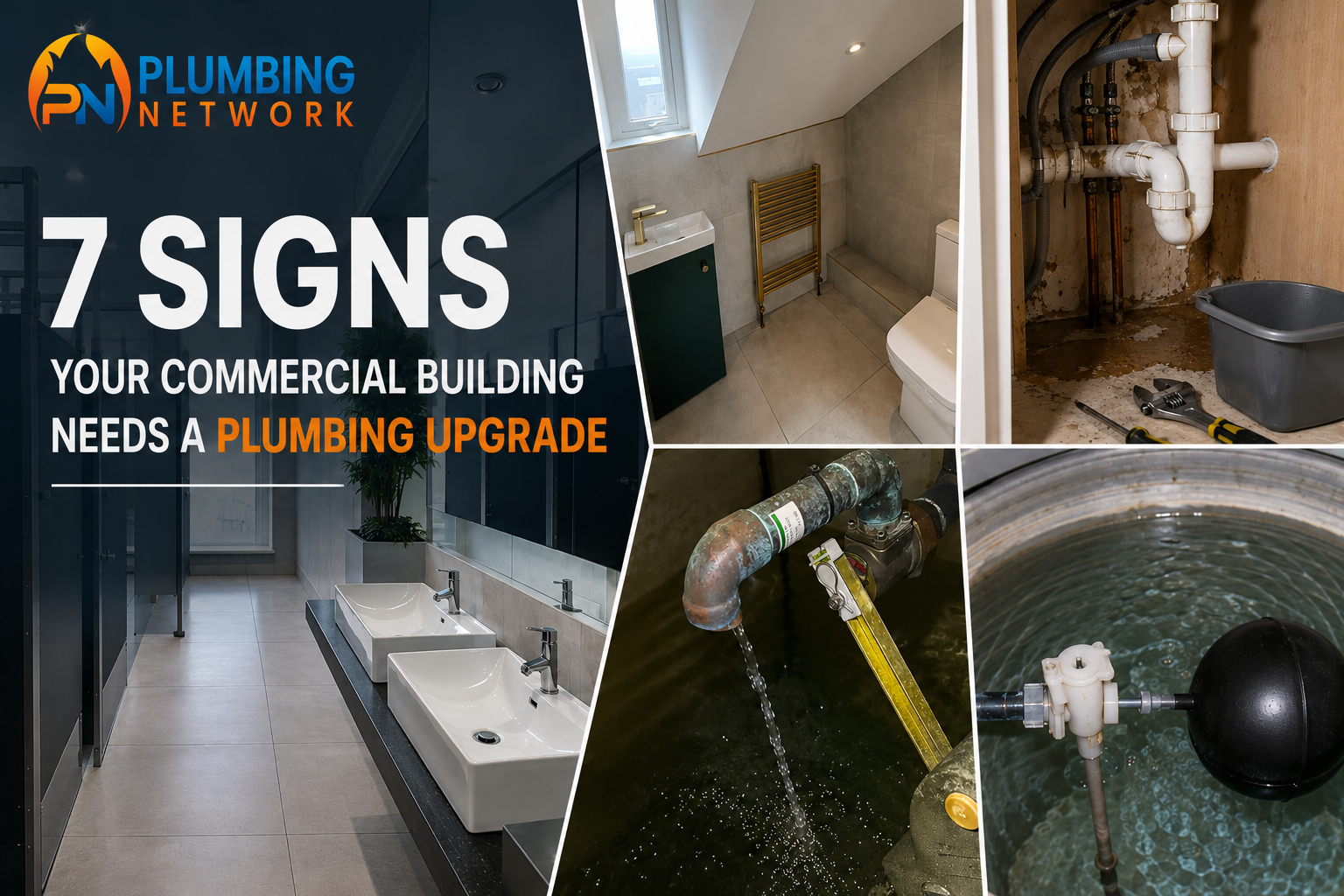
Commercial plumbing systems work hard every day. In offices, warehouses, restaurants, retail units, schools and other commercial premises, pipework, toilets, taps, drainage and water systems may be used far more frequently than they would be in a typical home.
Over time, that level of use can expose weaknesses.
A dripping tap or occasional slow drain might not seem particularly serious. However, repeated plumbing problems can indicate that parts of the system are ageing, damaged or no longer suitable for the demands of the building.
For business owners, facilities managers, commercial landlords and builders, recognising these warning signs early can make a significant difference. A planned commercial plumbing upgrade can help reduce disruption, control repair costs and improve the reliability of the property.
If you manage premises in South Yorkshire, getting an experienced commercial plumbing Sheffield specialist to inspect recurring problems can also help you understand whether another repair is enough or whether an upgrade would provide better long term value.
Here are seven warning signs that should not be ignored.
1. Plumbing Repairs Are Becoming More Frequent
Every commercial building will need plumbing repairs occasionally. The concern starts when those repairs become routine.
Perhaps one toilet is repaired and another develops a fault shortly afterwards. A leaking pipe may be fixed, only for another leak to appear somewhere else in the building.
Individually, these problems can seem unrelated. Together, they may indicate that the plumbing infrastructure is reaching the end of its practical service life.
Older valves, seals, joints and pipework can gradually deteriorate. Repairing individual components may solve the immediate problem, but it does not necessarily address the condition of the wider system.
Keep a Record of Plumbing Callouts
Facilities managers should keep a simple record of plumbing problems.
Include the location, type of fault, date of repair and whether the same problem has happened before.
For example, if the same toilet block, kitchen or section of pipework requires attention every few months, further investigation is worthwhile.
Experienced commercial plumbers in Sheffield can inspect the affected areas and advise whether targeted replacement could be more practical than continuing with repeated repairs.
2. Your Building Has Persistent Water Pressure Problems
Good water pressure is important in many commercial properties.
Employees need reliable washroom facilities. Restaurants and hospitality businesses need consistent water supplies for cleaning and food preparation. Larger premises may have several outlets operating simultaneously.
If taps regularly produce weak or inconsistent water flow, there could be an underlying problem.
Possible causes include restricted pipework, partially closed valves, internal corrosion, leaks or pipework that is unsuitable for the building’s current water demand.
Do Not Assume Low Pressure Is Normal
A common mistake is simply accepting poor water pressure in an older commercial building.
However, pressure problems should be investigated rather than ignored.
The solution may be relatively straightforward. In other cases, sections of old or unsuitable pipework may need to be replaced.
A professional assessment can identify the cause before unnecessary work is carried out.
3. Leaks Keep Appearing Around the Property
One isolated leak does not automatically mean you need a complete commercial plumbing upgrade.
Multiple leaks are different.
If leaks are developing in several areas of a property, the condition of the wider plumbing system should be considered.
Ageing joints, corrosion, damaged fittings and deteriorating pipework can all increase the risk of leaks.
In a commercial environment, even a relatively small leak can cause significant problems if it remains unnoticed.
Water can damage ceilings, walls, flooring, stock, equipment and decorative finishes. It can also cause disruption to staff, tenants or customers.
Watch for Hidden Signs of Water Leaks
Not every commercial plumbing leak is immediately visible.
Look out for signs such as:
- Unexplained damp patches
- Water staining on ceilings or walls
- Musty smells
- Unusual sounds of running water
- Unexpected increases in water consumption
- Damp flooring around plumbing areas
- Repeated drops in water pressure
If you notice any of these signs, arrange an inspection.
Finding the source early can help limit damage and may prevent a minor problem becoming a major commercial repair.
4. Your Pipework Is Old, Corroded or Showing Visible Damage
Visible pipework can provide useful clues about the overall condition of a commercial plumbing system.
Corrosion, staining, damaged fittings and evidence of previous repairs should not be ignored.
Older commercial buildings may also contain plumbing systems that have been altered several times over the years. Extensions, refurbishments and changes in building use can result in a mixture of old and newer pipework.
This can make maintenance more difficult.
Age Alone Does Not Decide Whether Pipework Needs Replacing
Old pipework does not automatically require replacement.
Condition matters more.
However, if older pipes are combined with repeated leaks, poor pressure, corrosion or ongoing repair costs, an upgrade may be worth considering.
Professional commercial plumbers Sheffield businesses rely on should assess the condition and suitability of the existing system before recommending replacement.
This avoids unnecessary work while helping identify sections that genuinely need attention.
5. Your Water Bills Have Increased Without an Obvious Reason
A sudden or gradual rise in water consumption deserves investigation.
If the way your business operates has not changed significantly but water usage has increased, the plumbing system could be contributing to the problem.
A leaking toilet, dripping tap or concealed pipe leak can waste considerable amounts of water over time.
In a large commercial building with several washrooms, kitchens or other water outlets, small inefficiencies can quickly add up.
Compare Water Usage Regularly
Do not wait until there is a major leak before checking consumption.
Review water bills and meter readings regularly.
If usage suddenly changes, investigate why.
You can also check the meter when the building is quiet and water should not be in use. Unexpected movement may indicate water is flowing somewhere within the property.
However, identifying concealed leaks should be left to an experienced professional.
A commercial plumbing Sheffield inspection can help identify inefficient fixtures, leaking components and sections of plumbing that may need upgrading.
6. Drainage Problems Keep Returning
Blocked drains happen.
However, drains that repeatedly block, empty slowly or produce unpleasant smells may indicate a more significant issue.
In commercial properties, drainage systems can experience heavy use. Restaurants, offices, schools, retail premises and industrial buildings can all place different demands on drainage infrastructure.
Repeated blockages could result from damaged pipes, poor installation, inappropriate waste entering the system or an existing drainage arrangement that is no longer suitable for how the building is used.
Repeated Drain Clearing Is Not Always the Solution
If the same drain repeatedly blocks, simply clearing it every time may only provide temporary relief.
The cause needs to be identified.
For example, if an older commercial property has been converted for a new use, its original plumbing and drainage arrangement may not have been designed for the current level of demand.
In this situation, an upgrade may provide a more reliable long term solution.
7. The Plumbing System No Longer Matches How the Building Is Used
Commercial properties change.
An office may expand from 20 employees to 80. A retail unit might become a restaurant. A warehouse may be converted into several commercial units. A landlord might refurbish an older building for new tenants.
However, the plumbing infrastructure does not automatically adapt when the building changes.
Existing pipework, toilets, sinks, drainage and water outlets may have been designed for a completely different level or type of use.
This can create recurring problems.
Plumbing Should Be Considered Early During Commercial Refurbishment
Builders, property developers and commercial landlords should assess plumbing requirements during the planning stage of a refurbishment.
Waiting until new kitchens, toilets, flooring or walls have already been installed can make plumbing alterations more disruptive and expensive.
A commercial plumber can review the proposed layout and help determine whether existing services are suitable.
This is particularly useful when:
- Changing the use of a commercial property
- Creating additional washrooms
- Adding kitchen or staff facilities
- Dividing one property into several units
- Refurbishing an older building
- Increasing occupancy
- Relocating water outlets
- Altering drainage layouts
Planning plumbing work alongside the wider project can help builders avoid delays and unexpected changes later.
Repair or Upgrade: How Do You Decide?
Not every plumbing problem requires replacement.
A good commercial plumber should first identify the cause of the problem and assess the condition of the existing system.
In many cases, a repair is perfectly appropriate.
However, when several recurring issues are connected to ageing or unsuitable infrastructure, continuing to repair individual faults may become less economical.
Consider factors such as repair frequency, disruption to operations, water efficiency, the condition of the pipework and future plans for the property.
Think About Whole Life Cost
The cheapest immediate repair is not always the cheapest long term option.
Imagine a business spending money every few months repairing different sections of ageing pipework.
Each individual invoice may appear manageable. However, the combined repair cost, staff time, disruption and potential water damage could eventually exceed the cost of planned replacement.
Therefore, decisions should be based on both immediate cost and expected future performance.
Why Planned Commercial Plumbing Upgrades Make Sense
Emergency plumbing work often happens at the worst possible time.
A major leak during opening hours can affect employees, customers, tenants and contractors. In some cases, areas of a building may have to be temporarily closed.
Planned work gives businesses greater control.
You can schedule upgrades around quieter periods, coordinate work with other contractors and prioritise the most important areas first.
It also provides an opportunity to review whether the current plumbing system still meets the requirements of the property.
Working With Commercial Plumbers in Sheffield
Commercial plumbing requires a different approach from straightforward domestic repairs.
The plumber needs to consider how the business operates, how many people use the building, access requirements, disruption and the condition of the wider system.
For Sheffield businesses, landlords, facilities managers and builders, Plumbing Network provides professional commercial plumbing services across Sheffield and surrounding areas.
The team can assess existing plumbing systems, investigate recurring problems and carry out appropriate commercial plumbing repairs and upgrades.
The aim should always be practical.
If a repair is suitable, there is no reason to replace something unnecessarily. However, where ageing or unsuitable plumbing is creating repeated problems, a planned upgrade can provide a more reliable solution.
Conclusion
Commercial plumbing problems rarely become cheaper when they are ignored.
Repeated leaks, poor water pressure, rising water consumption, recurring drainage problems and ageing pipework can all indicate that a building needs more than another temporary repair.
The key is to investigate early.
A professional assessment can help you understand what is causing the problem, which parts of the system require attention and whether repair or replacement makes the most sense.
If you own, manage, maintain or are refurbishing a commercial property in Sheffield, Plumbing Network can inspect your plumbing and recommend a practical solution.
Addressing problems early can reduce disruption, protect your property and help keep your business running safely.



Leave a Reply